
Ms Office Pro Plus 2016 Download link and 100% Genuine activation Key.
Hi thanks for visiting this office Professional Plus 2016 blog.
Now you can use latest office pro plus 2016 genuine version only for $45.
This key for life-time.
What you need to do is download the office 2016 and activate the software with 100% genuine activation key. This activation key is for life time.
This is the download link just check this out. It is 2.3GB ISO file.
Office pro plus 2016 download link

Here if you want activate your office pro plus 2016 for life time simply send me a email message to this shehanshalitha5@gmail.com
Or contact me on Skype- shehan.shalitha1
You can pay me via on VISA/ Master card, Skrill,Western union,Payoneer or manual bank transfer.
My customer's feedbacks.
screen shot from ebay message.

Screen shot from my email message.

Screen shot from my email message.

Screen shot from my email message.

Ebay feedbacks

About me.
I am trusted wholesale seller in this field. You can buy from me these software for fair prices. And these keys are 100% working and 100% genuine products. You can validate these keys from Microsoft official website. I am selling these products on amazon, and ebay. I have good customer satisfaction about this office 2016 product.
These are the prices and offers for office pro plus 2016.
Office pro plus 2016 1 pc= $45
Office pro plus 2016 2 pc= $70
Office pro plus 2016 3 pc=$85
I will provide the download link and activation key within 2 days after the cleared payments. And I will send you a word help document that showing how to install this office 2016 .
You can enjoy with new released office 2016 within 2 days.
Thank you.
Contact me
Shehan shalitha
shehanshalitha5@gmail.com or shehanshalitha4@gmail.com
skype- shehan.shalitha1
Mobile for instant text message service- +940758824016
About Office Pro Plus 2016
Office 2016 review: The same old Office, but now with more collaboration
Microsoft calls it the biggest release since the first one. It's not, but it's probably the best.
Office is 25 years old this year. Some of the individual components are older, but it was 1990 that Microsoft first released a combined Office bundle, containing Word 1.1, Excel 2, and PowerPoint 2. Through the peculiar quirks of Microsoft's versioning scheme, today marks the 17th release, version number 16.0, branded Office 2016.
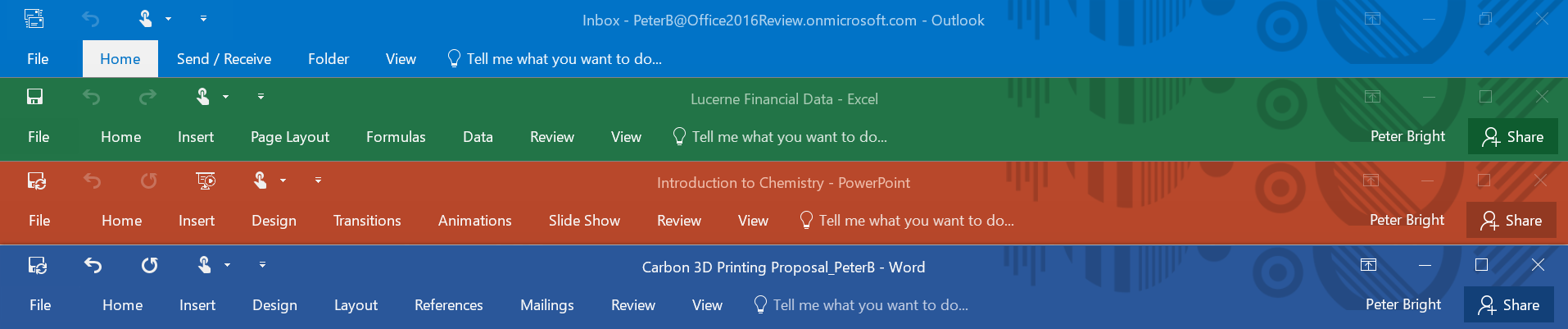
You can tell that you're using Office 2016 and not its predecessor Office 2013 because, by default, Office 2016 colorizes the title bars of each app to make them reflect each application's distinctive color (except for Outlook, which remains distressingly blue after Microsoft decided that it should no longer be gold for some inexplicable reason). That's optional, and if you prefer the more muted look you can disable it. This leaves you with something that looks like Office 2013 with only a few minor variations.
Desktop productivity applications haven't really changed much for many years. Office 2007 shook up the interface in a big way with its ribbon interface, and refined it in Office 2010 with the introduction of the "backstage" view used for saving, opening, and printing documents. But even the ribbon didn't change the basic structure of the apps, or the way they interoperate with one another. One feels that there hasn't really been anything new in terms of how these core word processing, spreadsheeting, presenting, and e-mail/calendaring apps since the days of the (long forgotten) Lotus Improv, which did at least try to offer an alternative to the formulae-in-a-grid of cells approach that defines spreadsheets today.
Office 2016 doesn't do anything to buck that trend.
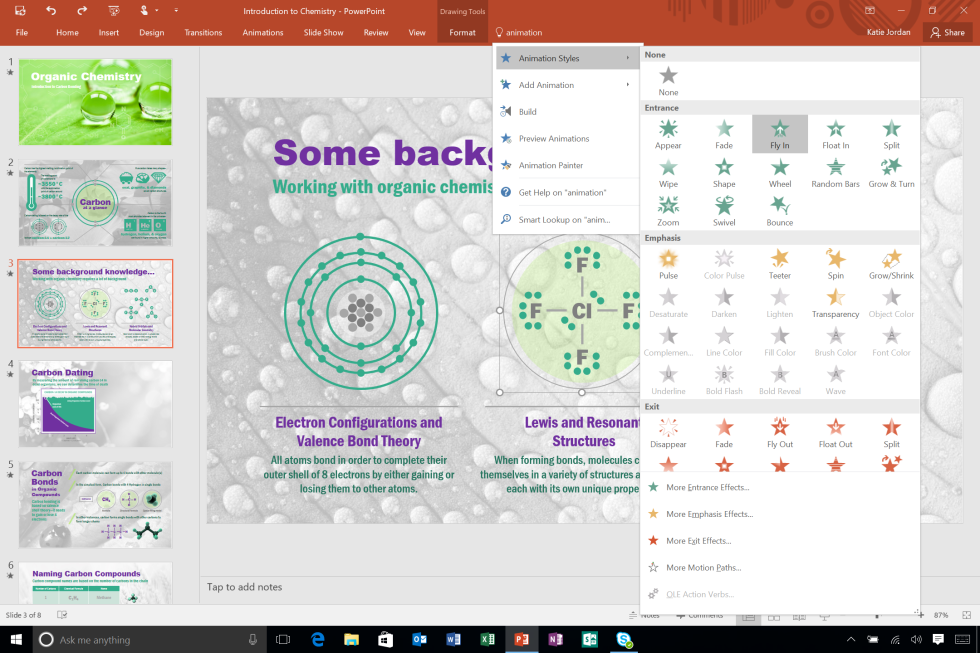
There are some small bits and pieces. The application ribbons now all have a text box labelled "Tell me what you want to do." It's a search for the ribbon, a way of finding functions, though I'm disappointed that it doesn't actually tell you where on the ribbon the function normally exists, so you end up using search over and over. If this had been part of Office 2007 then I suspect that a lot of the early venom directed at the ribbon would have been tempered. But we've had the thing for eight years now. Most Office users have probably figured out where all the things they need are by now. That's not to say that the feature is unwelcome or shouldn't have been added; it makes Office better. I just don't understand what took Microsoft so long to build it in, especially as there have been add-ons—first party ones, even—that perform a similar task.
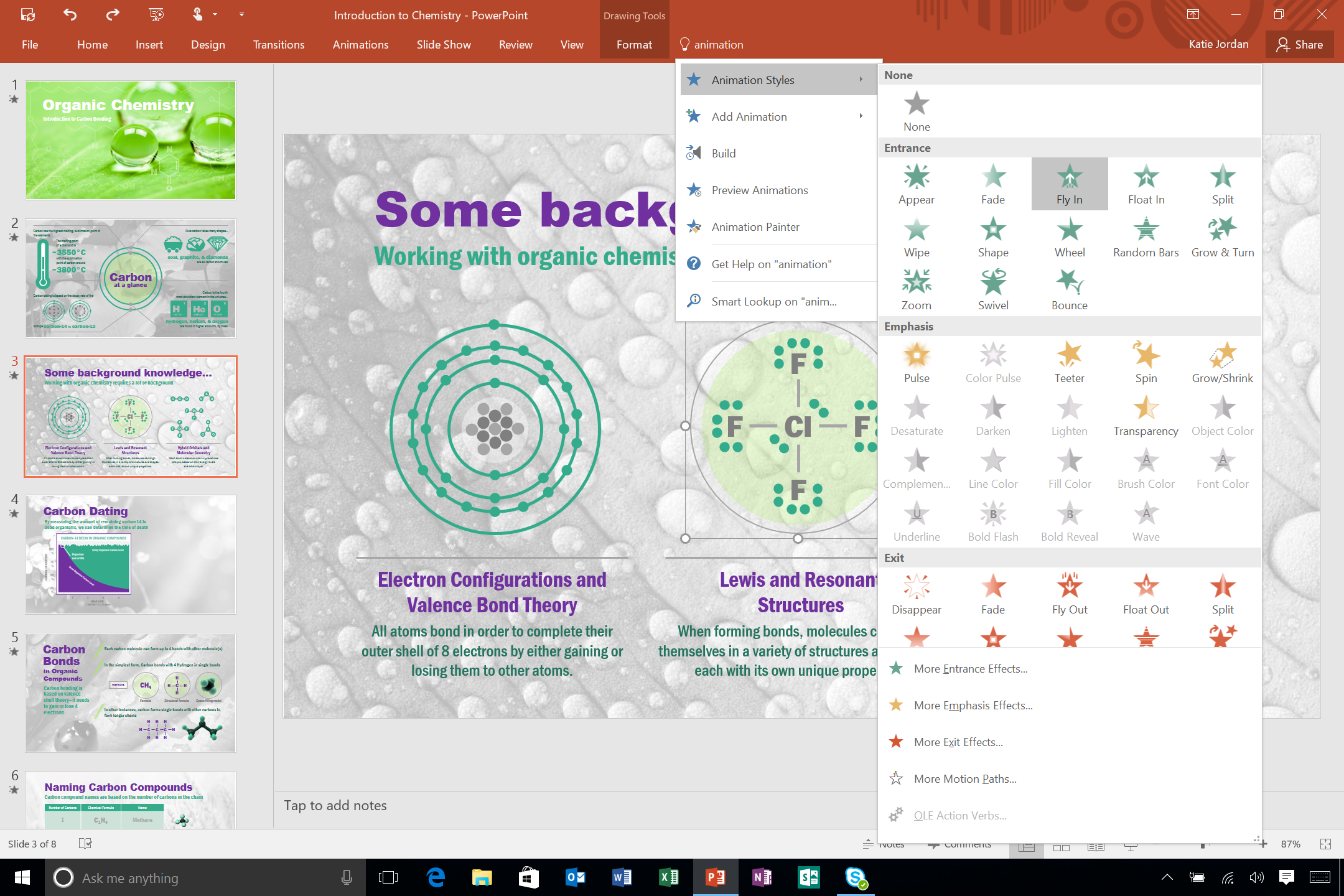
Tell Me helps you find features.
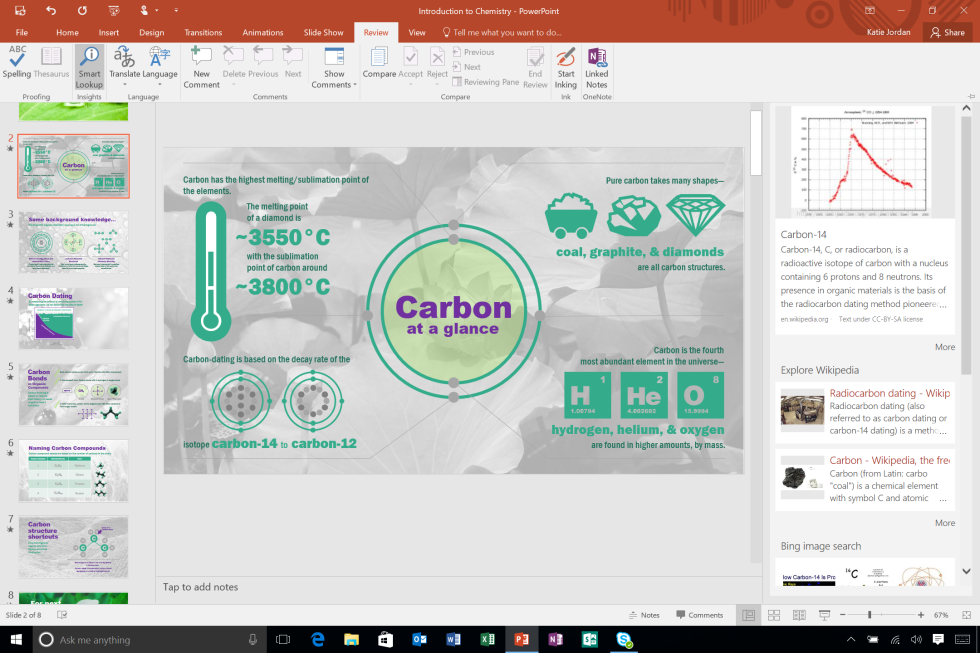
Across the apps there's a new "Smart Lookup" feature, which essentially does a Bing search on any selected term in a document. It's meant to be a little smarter than a regular Web search, using context in the rest of the document to inform the search. For example, a search for dating in a document that talks about Carbon-14 should find results about carbon dating, and not eHarmony.
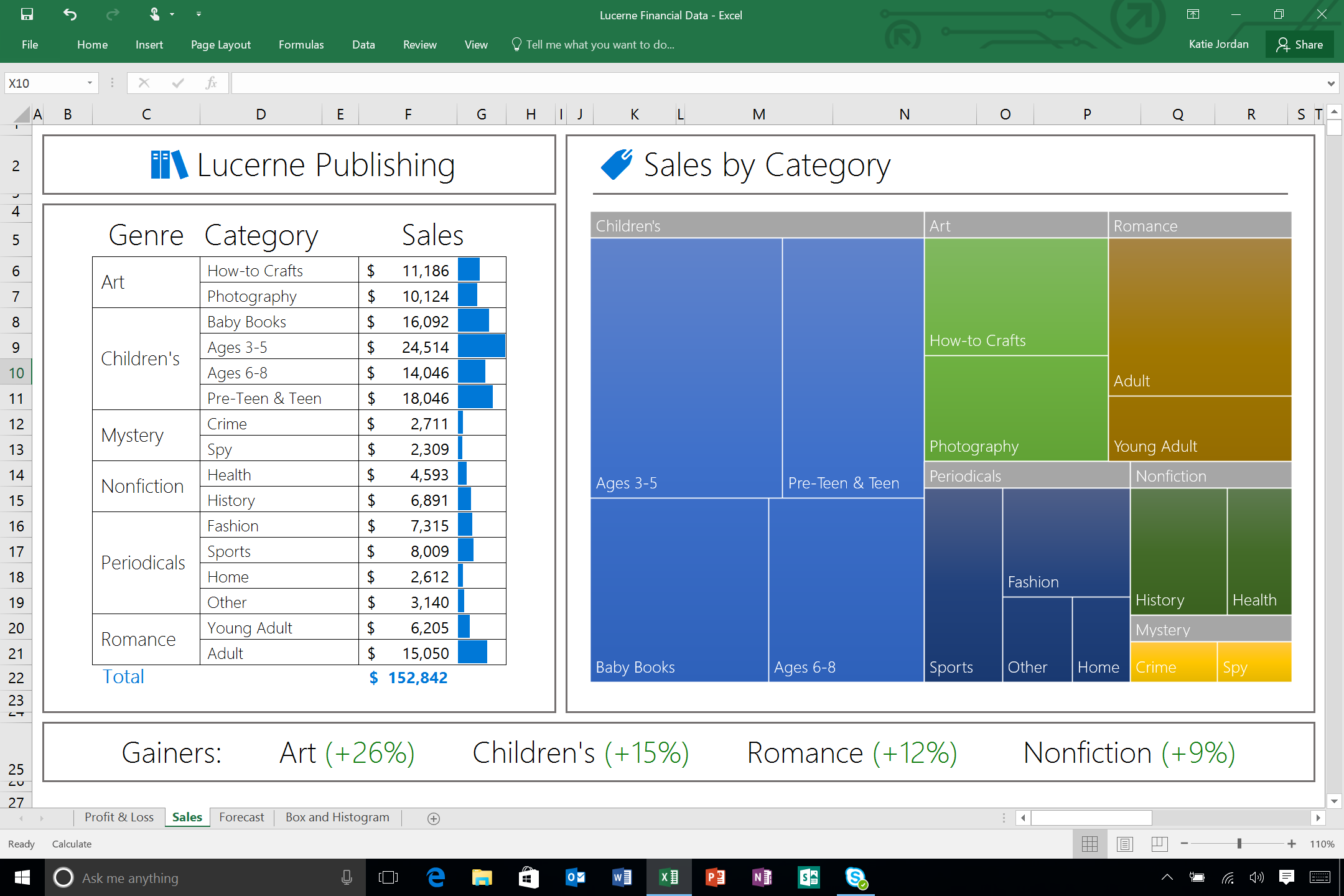
New graphs: Tree maps are pretty neat for visualizing certain kinds of data.
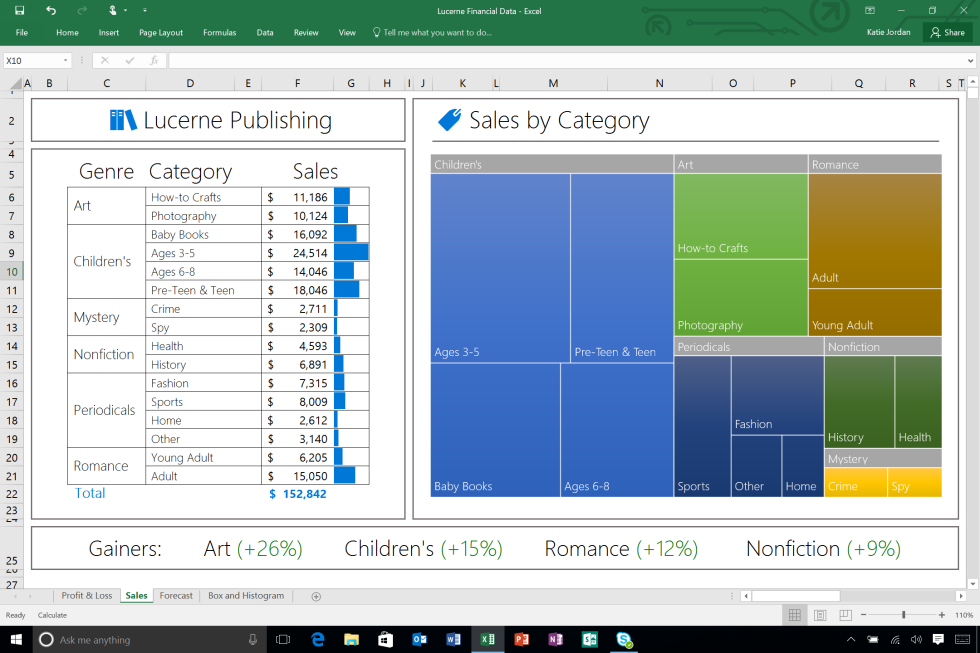
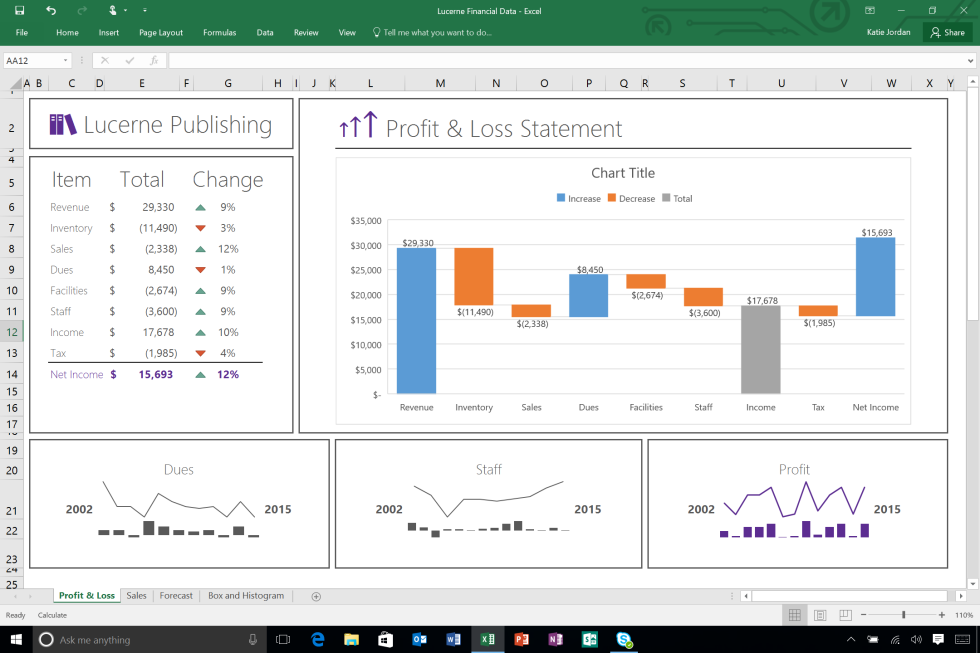
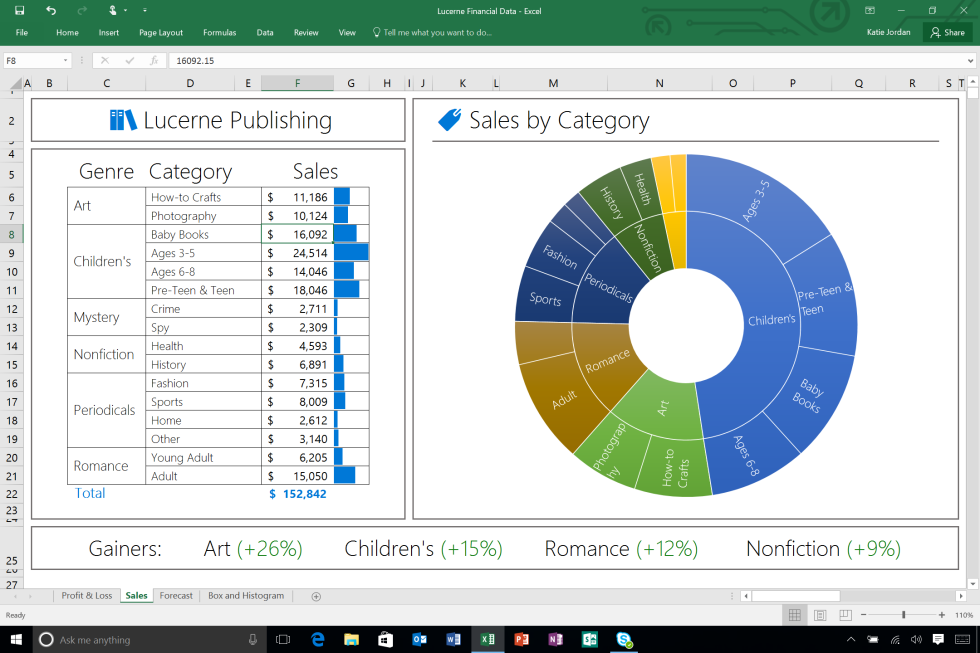
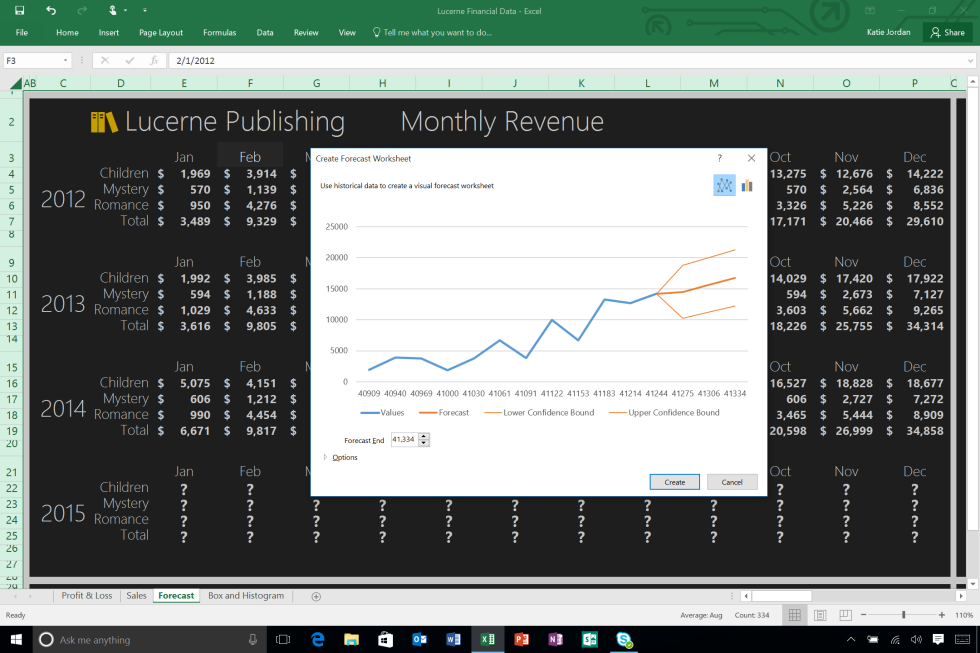
Excel has some new chart styles, though still lacks good tools for exporting charts.
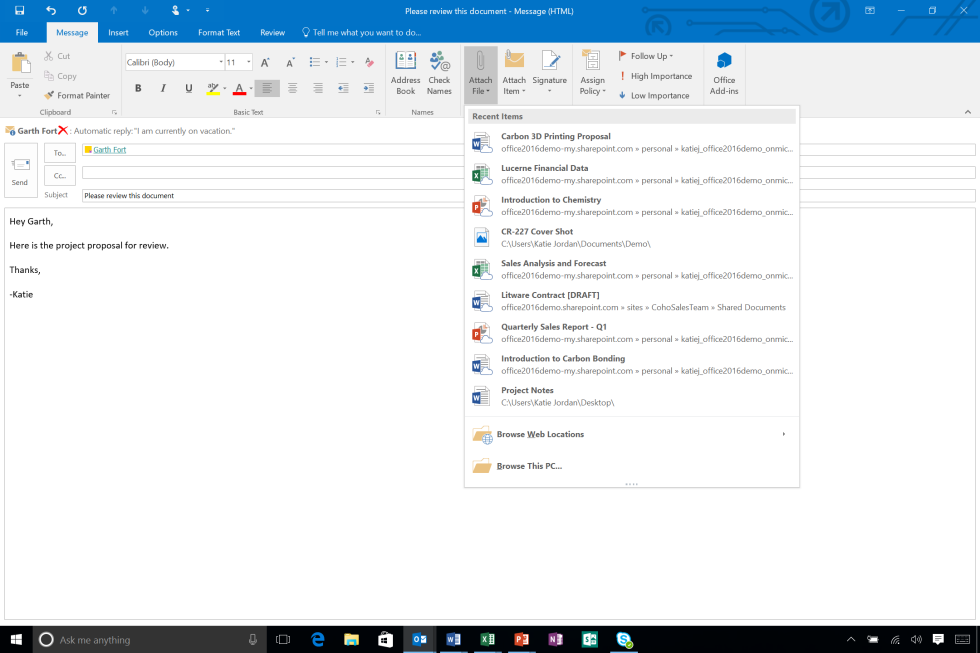
Outlook's add attachment button now includes a menu showing the most recently used Office documents, so that they can be attached more easily to e-mails. Outlook is also smarter about not attaching documents and instead sending links. When those recently-used documents are on OneDrive, OneDrive for Business, or SharePoint, the documents are shared as links. The editability of those documents—whether the linked document is read-only or read-write—can be specified in Outlook itself. Microsoft says that these improvements to the attachments button have managed what no previous version of Outlook has achieved: it has meant that employees have finally stopped e-mail documents to one another, and started sending links. Using e-mail to share files has annoyed system administrators since time immemorial; it tends to be both less space and time efficient than sharing files via file servers, but its convenience has meant that it has long been the end user's preferred method.

Outlook shows recent documents in its attachments button.
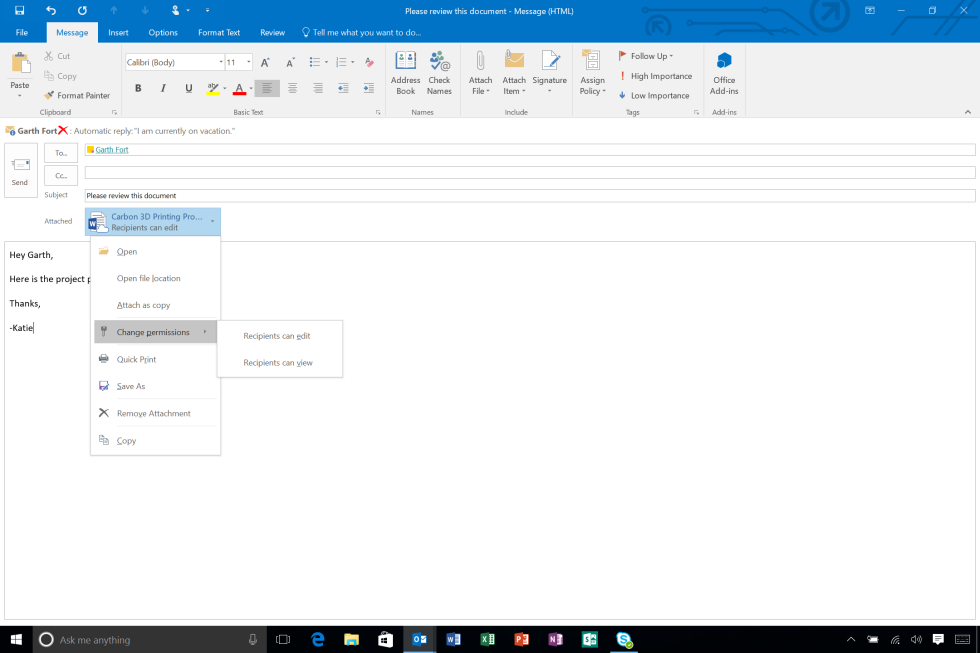
It's unlikely that Microsoft has truly cracked this usage conundrum, but Outlook 2016 may have finally taken a step in the right direction.
In conjunction with Office 365 (and presumably the next major version of Exchange), Outlook also supports a new junk mail filtering feature called "Clutter." Clutter is designed to put low priority e-mails—mailing lists, PR pitches, that kind of thing—into a separate "Clutter" folder, sending only a daily summary of all the mails tidied in this way. Clutter is designed to learn from past actions, and in practice—we've been using it at Ars for a few months now—it does a reasonable job, albeit a very conservative one.
Access and Publisher both still exist; they're essentially untouched. They pick up the new user interface elements, but these are applications that are very much in maintenance mode.
As far as the core Office experience goes, that's about it. Office 2016 is a very marginal improvement on Office 2013. It has a few more small features. It makes the 64-bit version an equal peer to the 32-bit version (before, the guidance was "use the 32-bit version unless you have huge Excel spreadsheets;" now it's "use whichever you want, but 64-bit is better for huge Excel spreadsheets". 64-bit is also more secure). It's slightly easier to find the features you want. It's a little bit better. Not a lot.
Collaboration is key
Microsoft, however, regards Office 2016 as a major release. Not because of any significant changes to the core functionality or interface, but because of collaboration. This too should be familiar; the company was banging the same drum with Office 2013, too.
Coauthoring, for example, is a bit better in Word. Word 2013 supported multiple editors of a document, but propagating changes to others was annoyingly manual. Changes had to be explicitly saved to the shared document to expose them to others, and documents had to be explicitly refreshed to make those changes visible. In Word 2016 that propagation is now live, without the save/refresh process. This is a big step forward in convenience, though it's still some way behind the collaborative editing available in various browser-based tools. In our testing, Word 2016 still locks documents on a paragraph-by-paragraph basis, so while multiple people can work on different parts of the document simultaneously, they do not appear to be able to do so on the same part. This is in contrast to for example the (now defunct) collaborative editing tool Etherpad. Etherpad was designed from the ground up to be used collaboratively, and allowed even for multiple simultaneous edits of the same word.
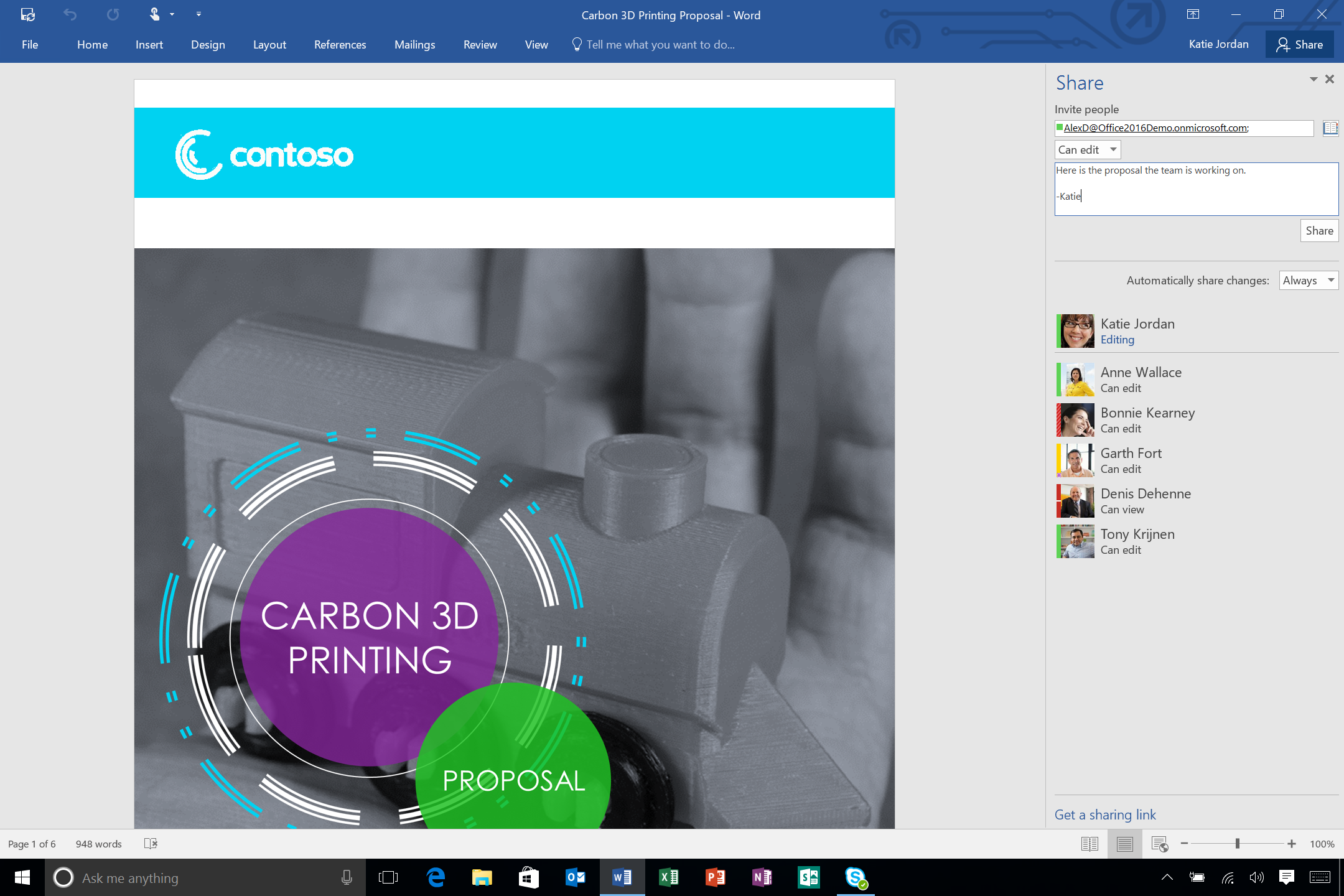
The new Share menu.
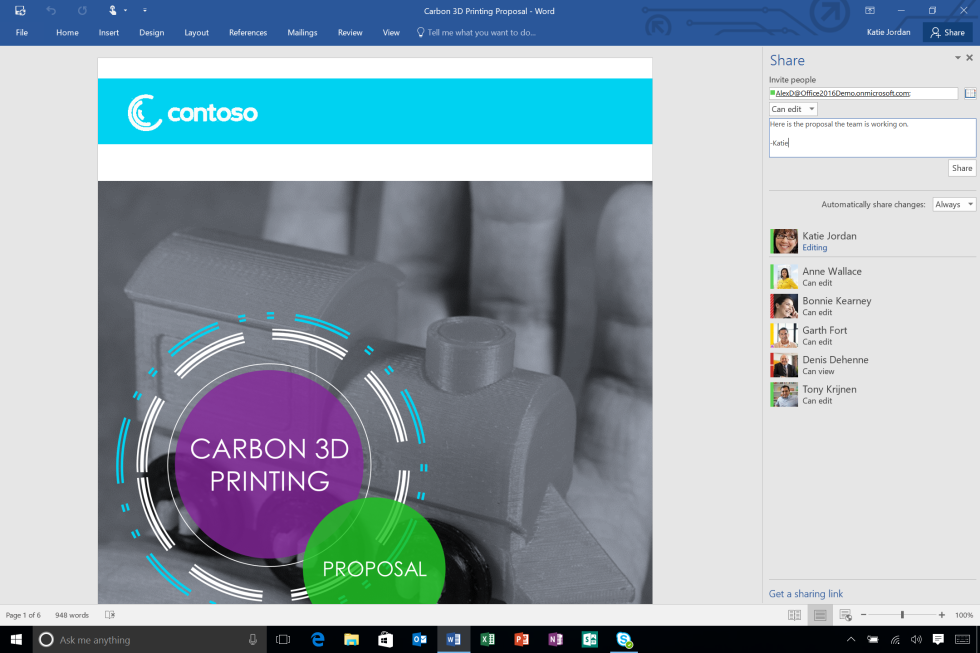

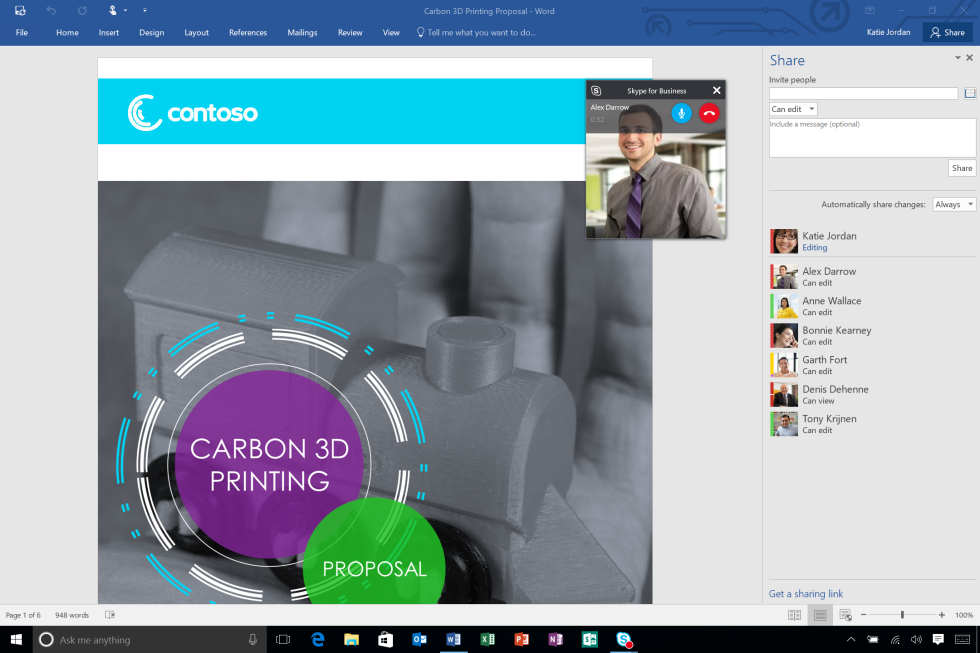
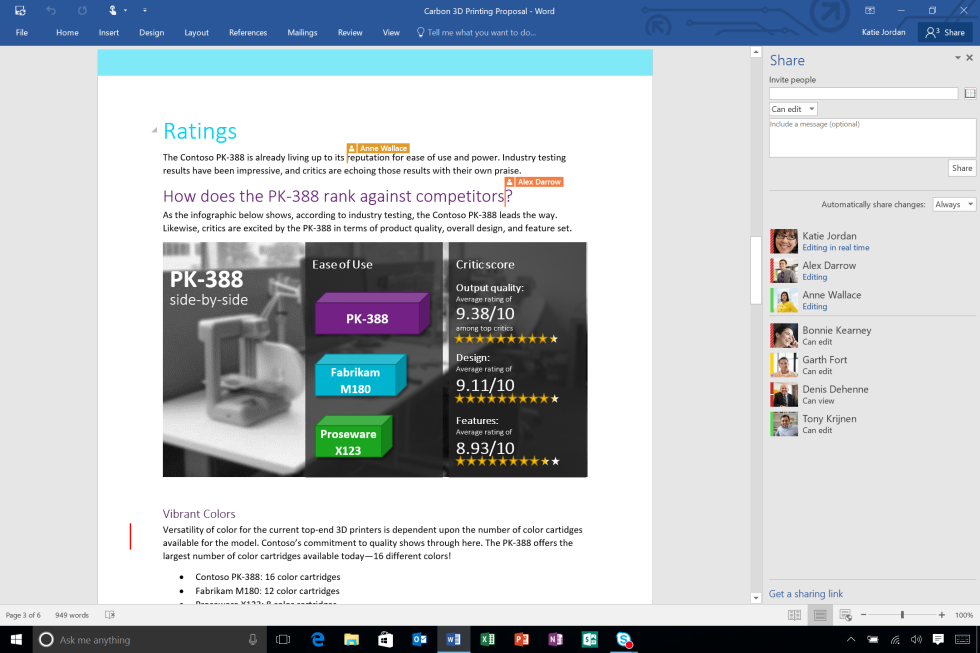

Collaboration also has an improved interface, with a simple Share button in each of Word, Excel, and PowerPoint. Skype for Business is also somewhat integrated, allowing an IM, voice, or video chat to quickly be started with any collaborators.
These interface changes aside, the collaborative editing capabilities of PowerPoint and Excel have not changed. Microsoft says that PowerPoint will be next to get similar finer-grained simultaneous editing, with Excel last (though Excel online has browser-based simultaneous editing for those who want it). When will these features be available? I'm not exactly sure, but I was told that we won't have to wait for Office 2019 to get them—for Office 365 subscribers, at least.
The subscription carrot
This is, once again, an extension of something that started with Office 2013. Office 365 subscribers who have subscriptions that include Office licenses get access to a special version of Office, the ProPlus version. Unlike regular perpetually licensed copies of Office, the ProPlus SKU should receive a steady stream of new features. In the 2013 generation, most of these features were administrative or otherwise minimally visible to end users. In the 2016 generation, the company intends to make them a more significant part of the ProPlus offering. This will include new interface elements for actually explaining what new features have been added, to ensure that users are kept abreast of the new options as they get added. More broadly, Microsoft is planning a release system similar to that of Windows 10. There will be a mainstream "Current Branch" that gets fixes and features immediately, and a "Current Branch for Business" that receives security fixes immediately, but receives feature updates on a three month delay.
Improved collaborative editing in PowerPoint and Excel is likely to be delivered to subscribers using this system.
Microsoft isn't doing away with perpetual licenses, but is working to make Office 365 subscriptions look more valuable. Earlier access to the new collaboration features is one manifestation of this, as is the Clutter feature.
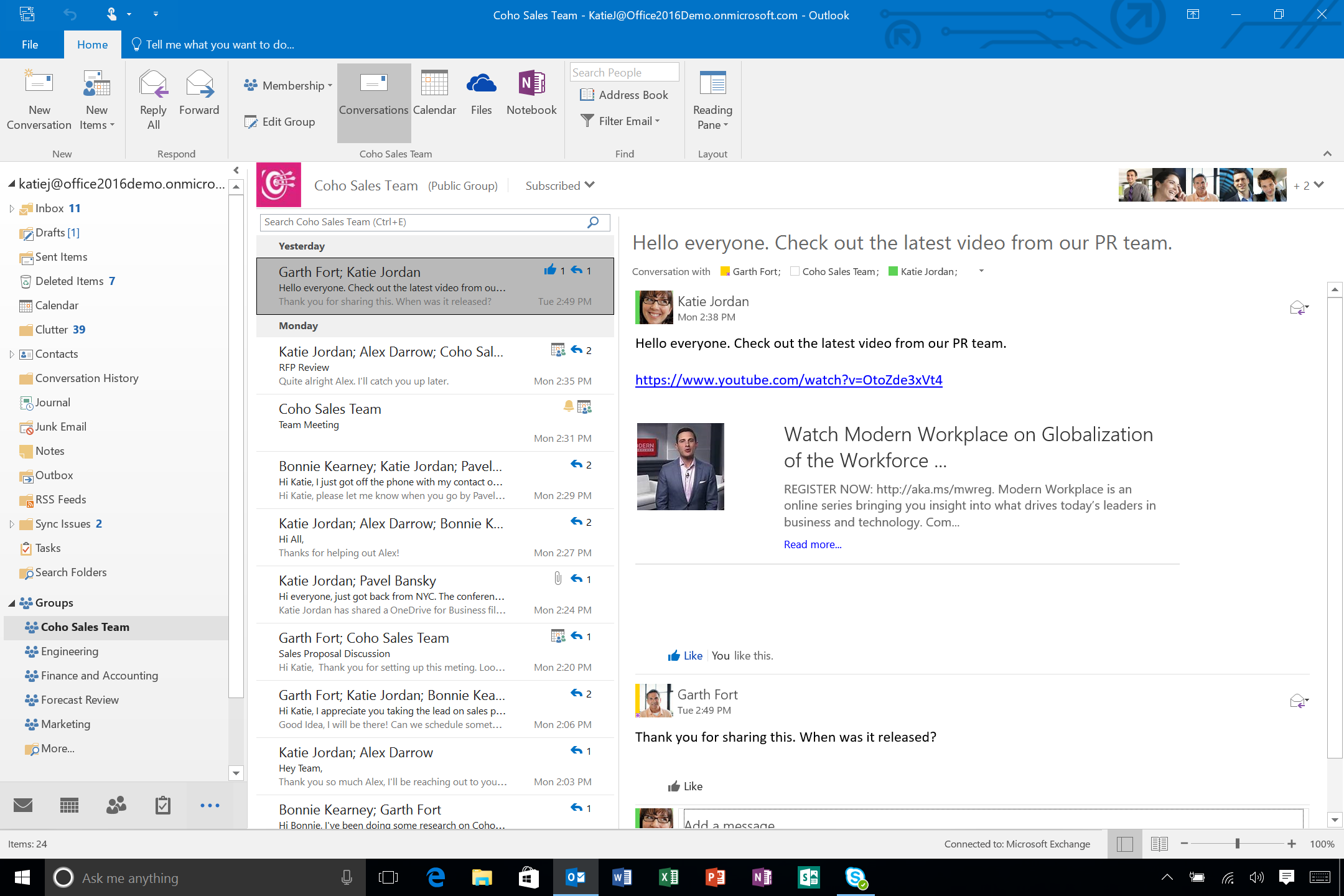
A third is Outlook's new Groups. With Office 365's Groups, Outlook users can create ad hoc user groups. These groups have a shared inbox for communication (using replies at the bottom of each message, so they act more like a conversation log than an e-mail), shared calendars, a shared OneDrive storage space, and a shared OneNote notebook. Unlike traditional Exchange mailing lists and shared calendars, groups can be created entirely be end-users with no administrative involvement. This feels like a solid addition to the platform.
The Office 365 offering is rounded out by a trio of new apps. Two of these—Delve and Sway—have been around for a few months. The third—Planner, now available in preview—is new.
As the unimaginative name might suggest, Planner is a planning tool. Users can create tasks, set their deadlines, track their completion of those tasks, assign them to different people, and get an overall view of how each group is doing. Microsoft is aiming at something that's more capable than sending e-mails between people, but much more accessible than the Gantt charts of Project. The basic app looks useful, though is currently quite isolated. It doesn't integrate with, for example, Outlook's To Do lists, nor with the Wunderlist app that Microsoft recently purchased. This kind of integration would make it much easier to integrate Planner into existing workflows and practices.
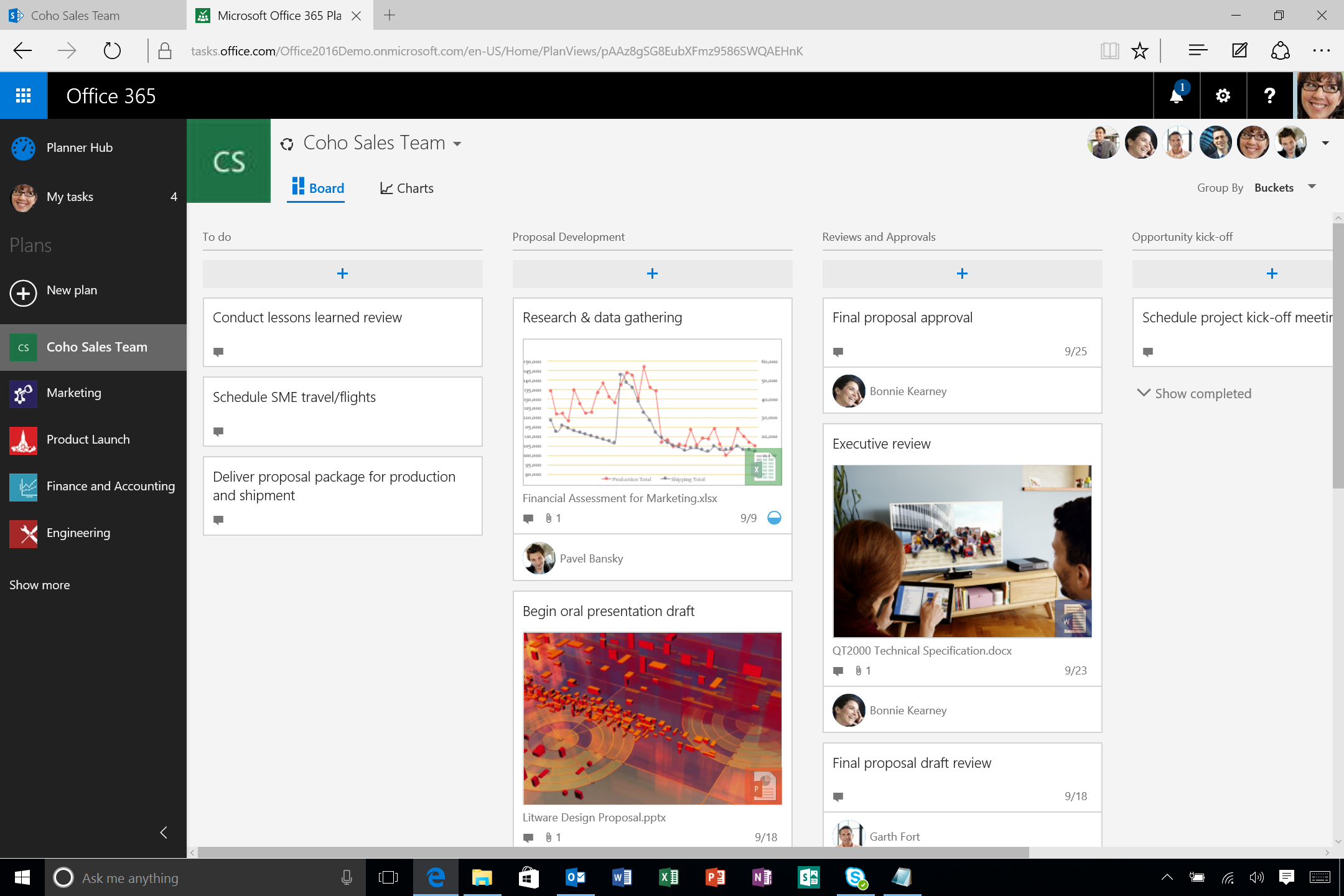
Planner is a straightforward, if simple, planning app.
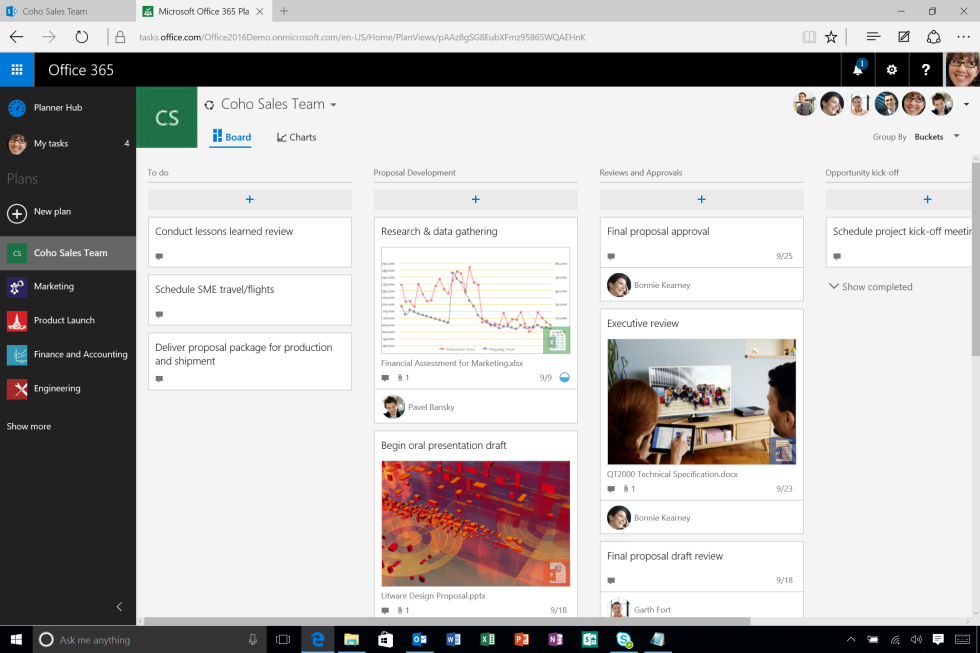
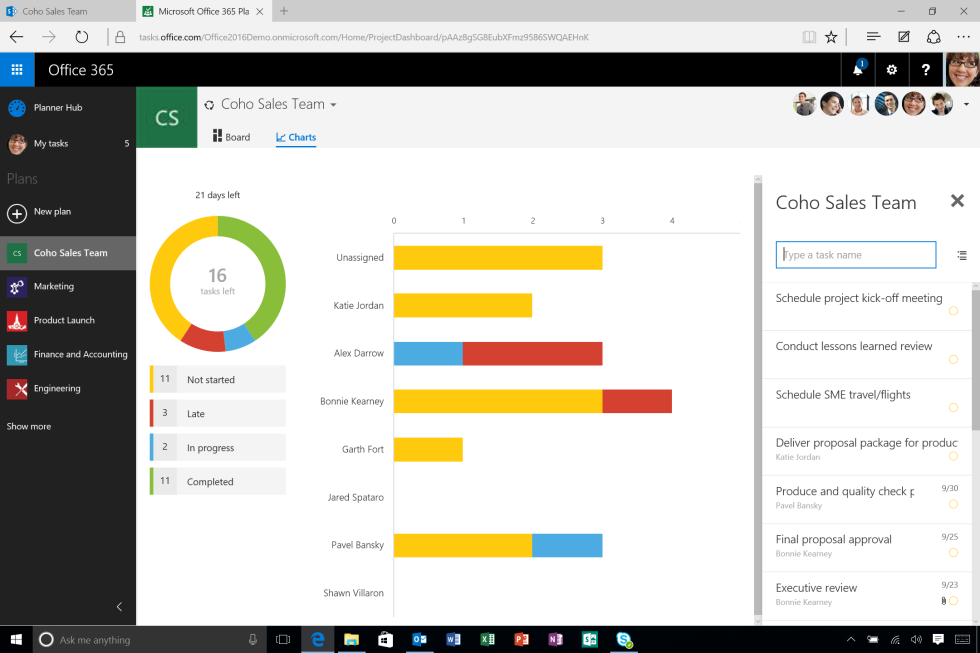

Delve is an app whose purpose I still don't fully understand. Microsoft has been promoting Delve as a tool that makes use of the "Office Graph"—the interconnected objects and relationships that an organization may have between its employees, their groups, and the documents that they work on—to show you things that an algorithm thinks that you may find interesting. For example, you can see which documents members of your team have been working on recently. Not working in a document-structured organization, the utility of this is a bit lost on me.
A taste of the future
Perhaps the most important of the online apps is Sway. Sway is a kind of presentation app, and while that reflexively fills me with horror, it feels significant because it feels like the first time that Microsoft is trying to address the traditional Office productivity tasks in a new way. Sway decouples the content of the presentation from its appearance. To create a Sway, you first write a "storyboard" that organizes text, images, charts, and videos, in the structure and sequence that you want. Then you pick a design—the fonts and colors that you want to use—and a presentation style—continuous flow or paginated. Sway then generates a layout that fits your content and criteria for you. Hit the "remix" button and Sway will produce a different layout.
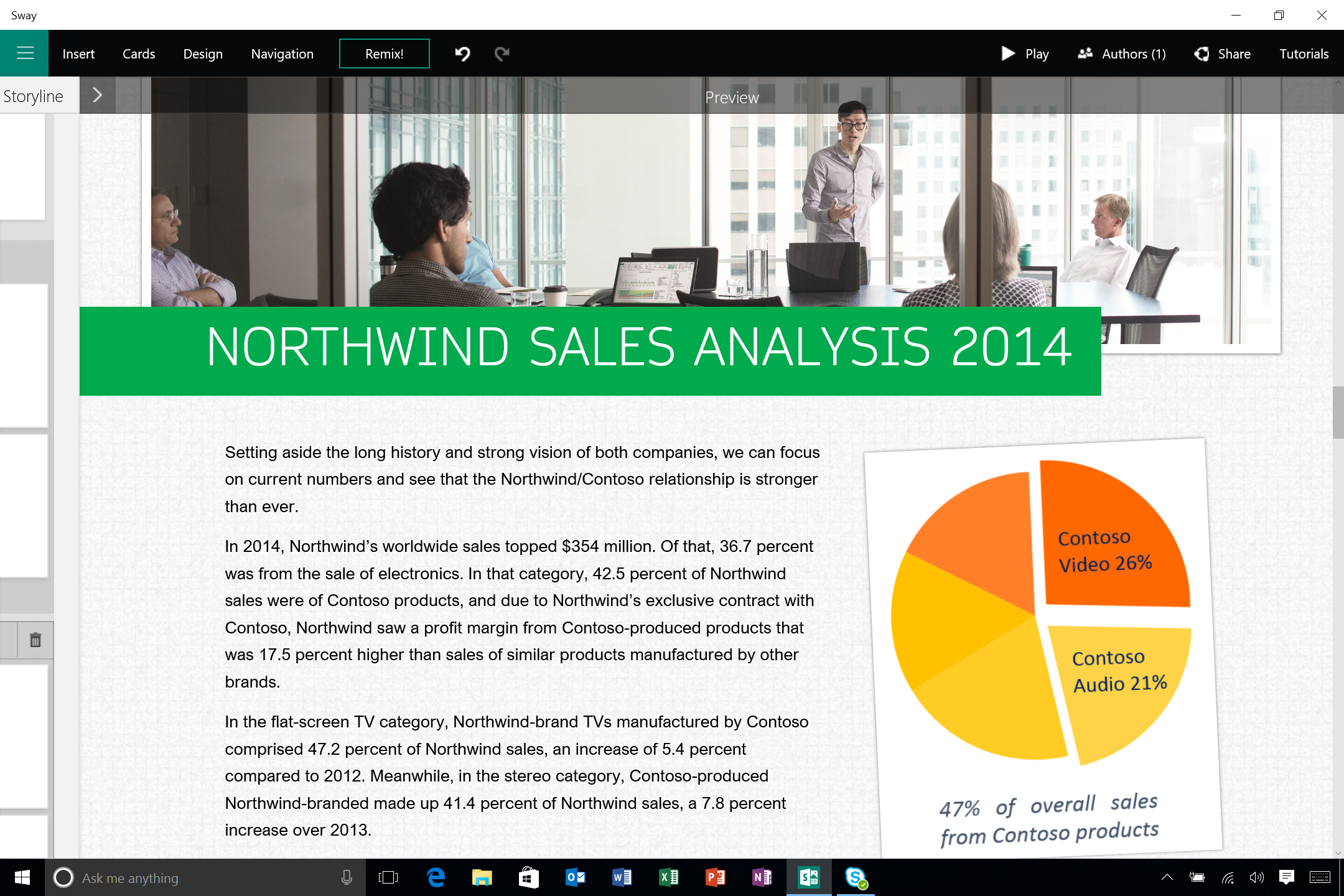
A Sway, er, Sway. That's what Microsoft calls both the app and the output it produces. They're not documents or files.
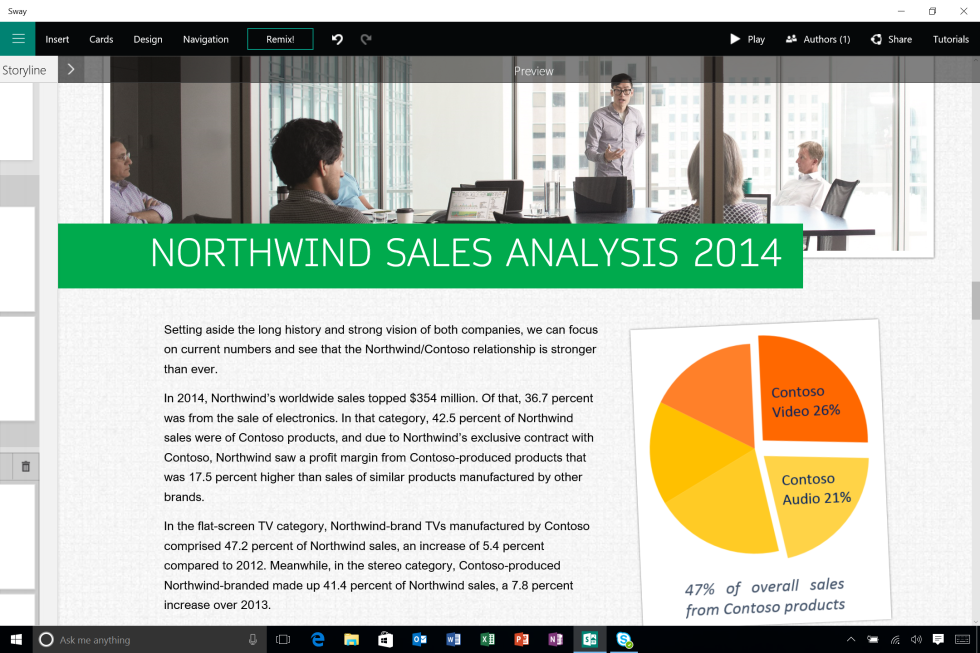
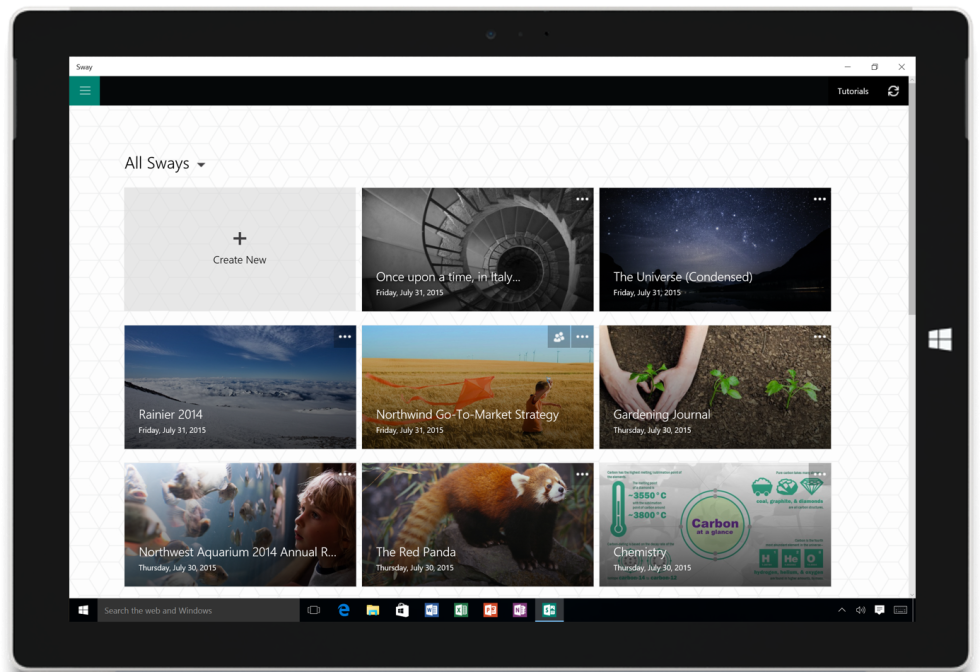
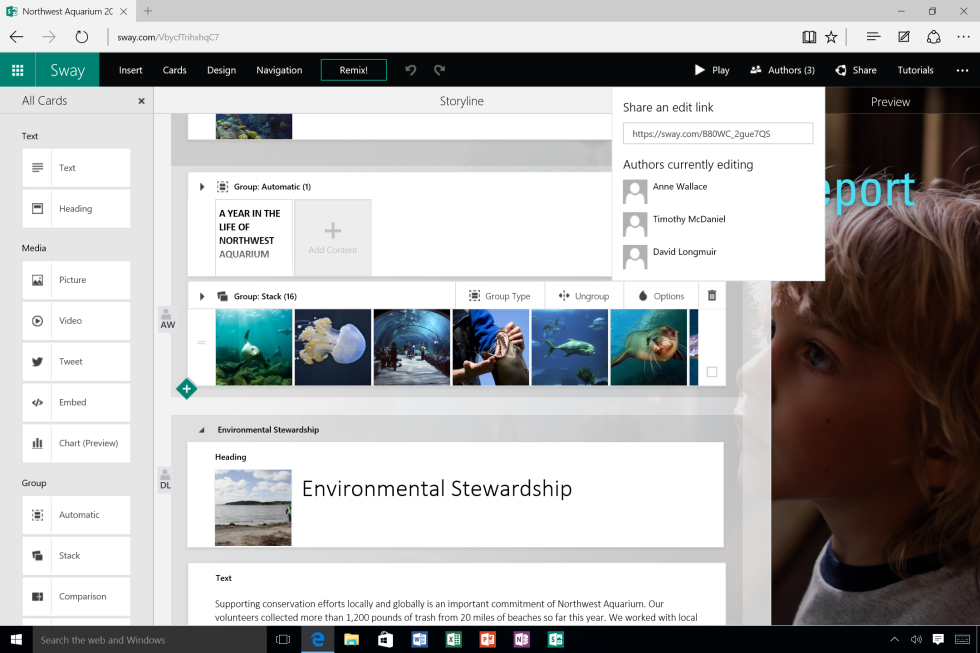
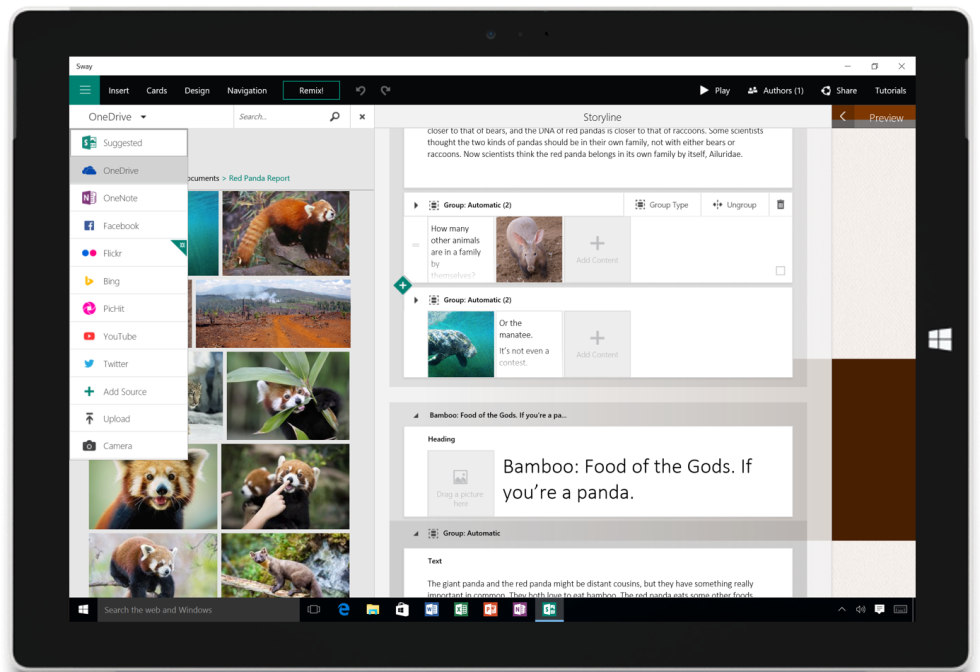
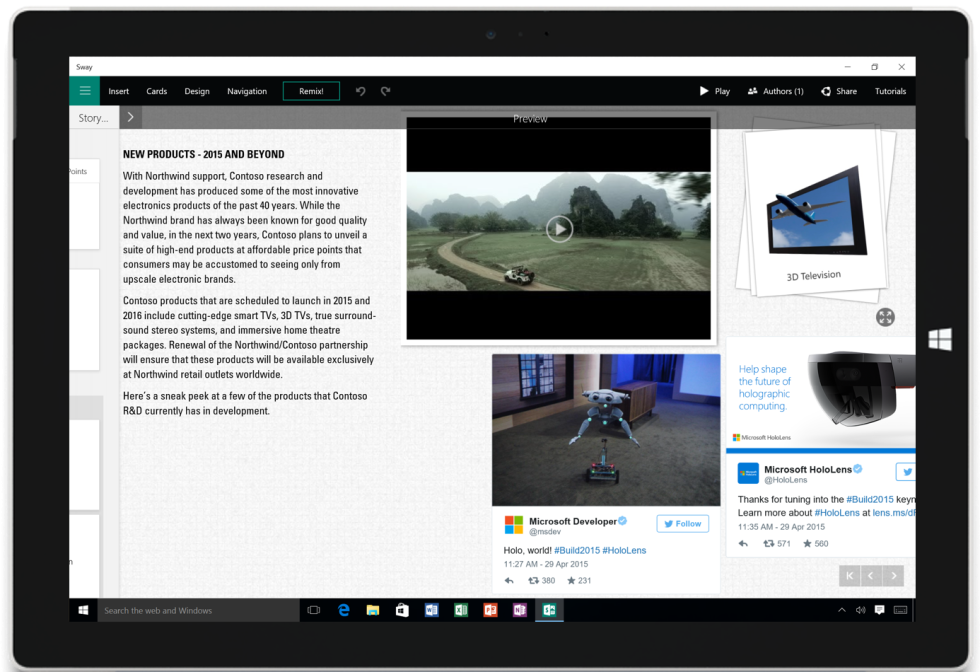
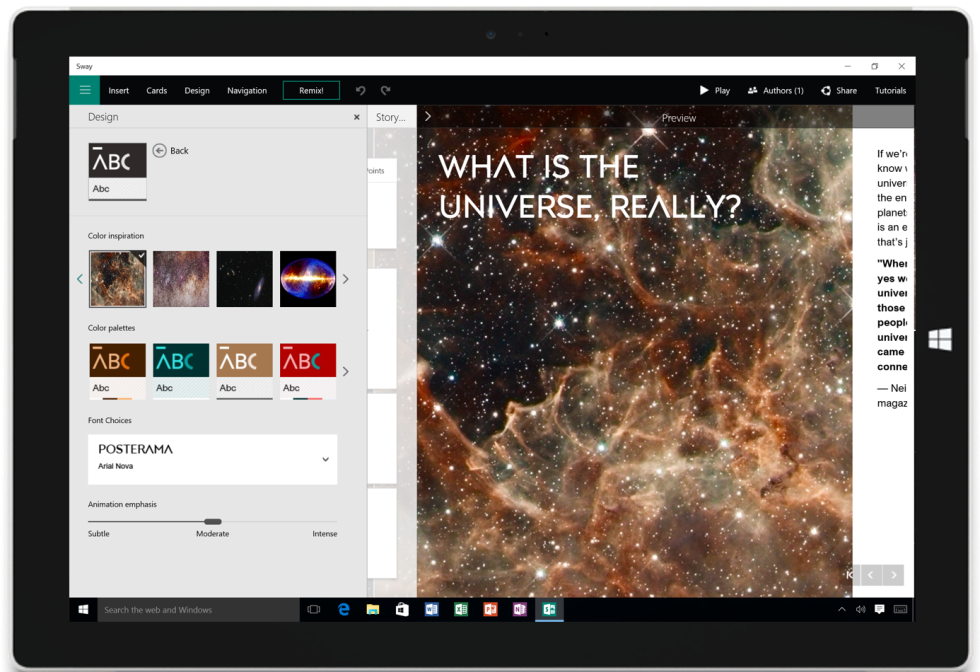
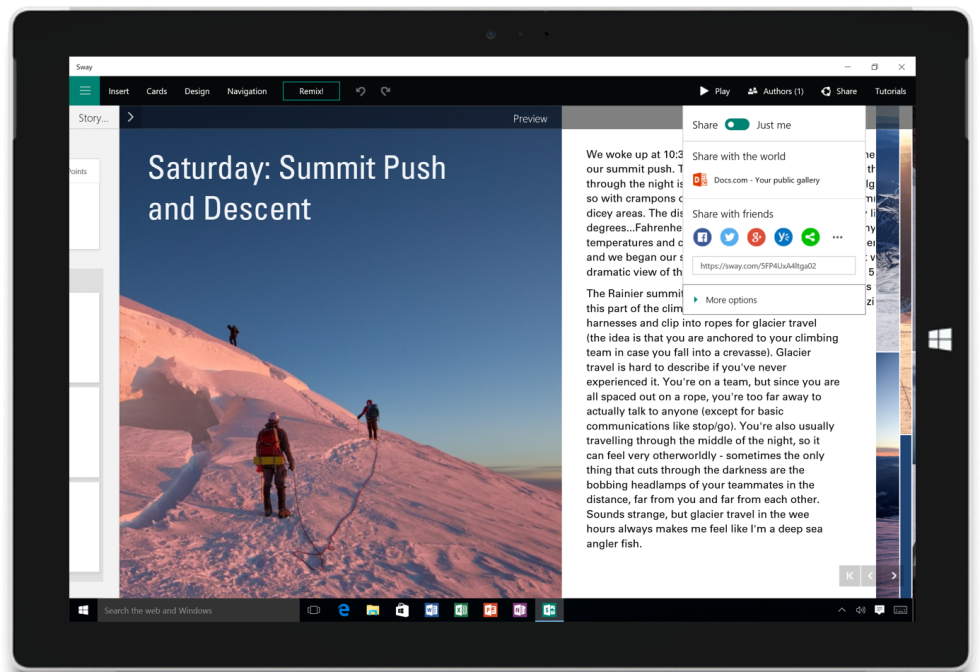
I don't think that Sway is going to be conquering boardrooms just yet. It's currently quite simple, with limited editing options. There doesn't appear to be any way to tweak one of the automated layouts, for example, and I think it will be difficult to apply, for example, corporate branding to a Sway. But it feels far more forward-looking than anything else in the Office suite. Sway's stories can be interactive, can be designed for consumption on continuously scrolling screens rather than discrete slides, and are intrinsically Web-based; there are no Sway files, just URLs (though there are Sway apps for Windows 10 and iOS, the content still all lives online). But it nonetheless feels like a promising tool for sharing information, and is much more pleasant to use than PowerPoint.
Office is as Office does
What else is there to even say about Office? It remains an important application, a business mainstay. But while operating systems and hardware have changed substantially over the years, Office really hasn't. It continues to work in basically the same way, with basically the same features, as it has done for years. There are things I wish Microsoft would do—how about supporting PGP encrypted mail alongside S/MIME, or letting me export Excel's charts as images with full control over the size and resolution, or giving Excel proper copy and paste—but these are all details around the edges.
Even the touch revolution has in some ways passed the traditional Office by. Office 2013 made some derisory efforts to make the apps touch friendly. This didn't really work—the question of how to make an app as complex as Office touch-friendly remains unanswered—but is in many ways now irrelevant, with separate feature-limited touch-oriented apps filling this role.
I've been using the beta of Office 2016 fairly uneventfully for the last few months, and it all works well enough. The truth is, I barely noticed it. I use Outlook every day, and Word, Excel, and PowerPoint a few times a week (though for Word and PowerPoint this is primarily in a read-only capacity), and were it not for the brightly colored title bars I wouldn't really have noticed that I'm on 2016 and not 2013.
In a lot of ways, the very notion of a major Office update doesn't make sense; these are not apps that see major changes between versions. Microsoft is continuing to make the Office 365 carrot more appealing; collaborative editing in Excel, in particular, would be a feature I'd use, and if that comes in a monthly update that's seamlessly and automatically delivered to my PC, rather than making me wait three years, so much the better. I rather feel that this kind of delivery system makes a lot more sense for something like Office, where all the work is going to produce incremental change rather than anything revolutionary.
This is especially true with the ever-growing set of online services. These are obviously going to tend to use "continuous" delivery, and that's the best match for a subscription payment model.
If I had a perpetually licensed copy of Office 2013 then I would find it very hard to justify buying a perpetually licensed copy of Office 2016. Even upgrading from Office 2010 would be hard to justify. But I probably wouldn't buy a perpetually licensed copy of Office these days anyway. The value adds of the Office 365 subscriptions, both the home ones and the business ones, mean that unless I had a particular revulsion to paying for a subscription—I don't—then that's the option I'd go for. And going for that option makes upgrading to the latest-and-greatest version a no-brainer. It's better than the old version.
The Good
- It's Office! If you like and know Office, you'll feel immediately comfortable and will be able to get down to work in no time at all.
- Sway does feel like the first forward-looking Office app for a long time.
- Outlook's Clutter feature definitely keeps my inbox tidier.
The Bad
- It's... Office. If you hate Office, that's not going to change.
The Ugly
- I want gold Outlook back.

No comments:
Post a Comment